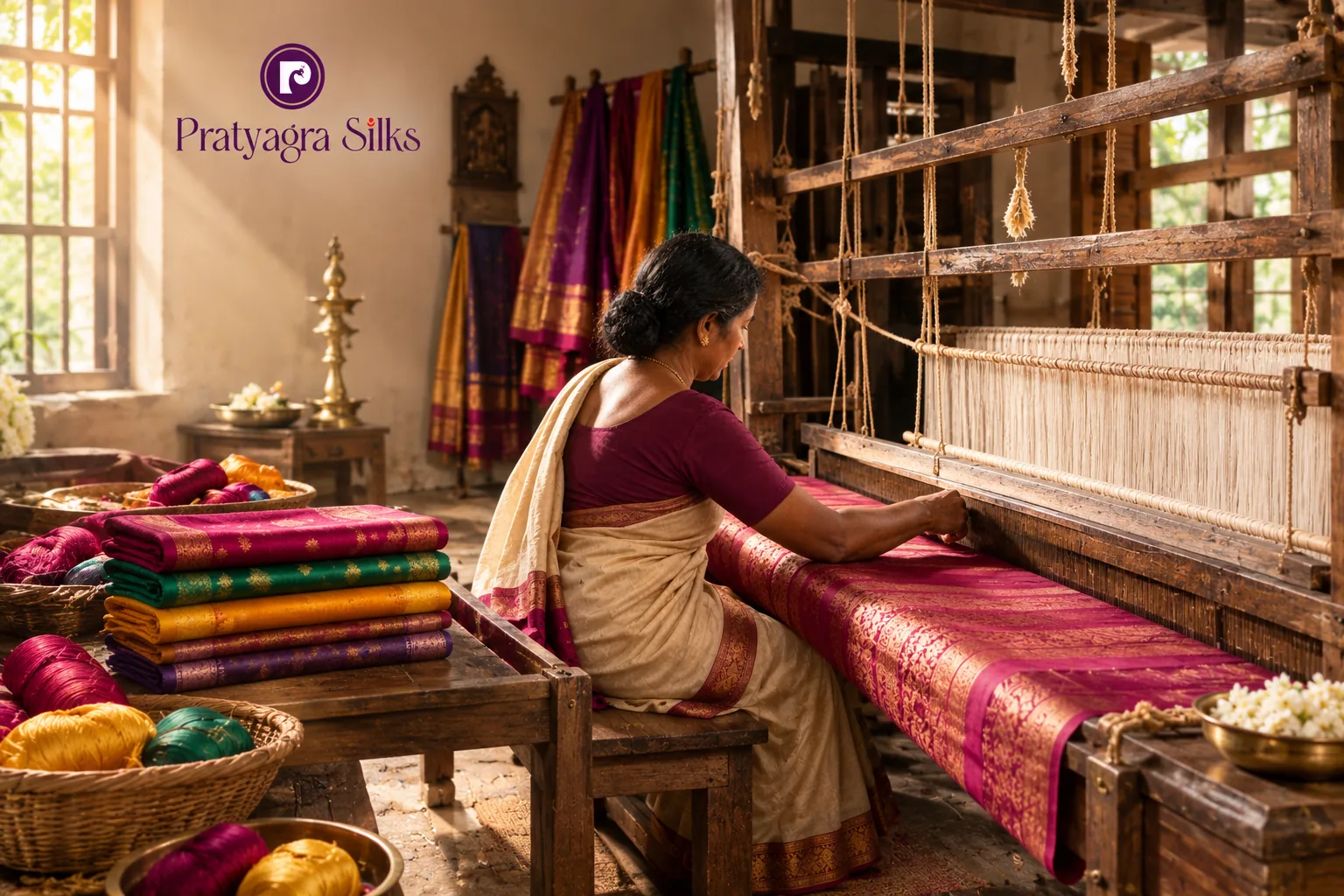
Why the Journey Between Weaver and Customer Matters
When you buy a handwoven saree, you are not simply buying fabric. You are buying hours of skilled work, carefully selected materials, regional craftsmanship, and a tradition that has been carried forward through generations.
But between the loom and the customer, a saree can sometimes pass through several layers of buying and selling.
At Pratyagra Silks, we chose a different approach.
We work as close to the source as possible, building direct relationships with weavers and artisan communities across India’s weaving regions. Fewer intermediary steps allow us to understand how a saree was made, who made it, and what goes into its final price.
For us, going direct is not just about how we source sarees. It is about creating a more transparent connection between the person who weaves the saree and the person who wears it.
What Does "Direct From the Weaver" Really Mean?
Why Did We Choose a Direct Sourcing Model?
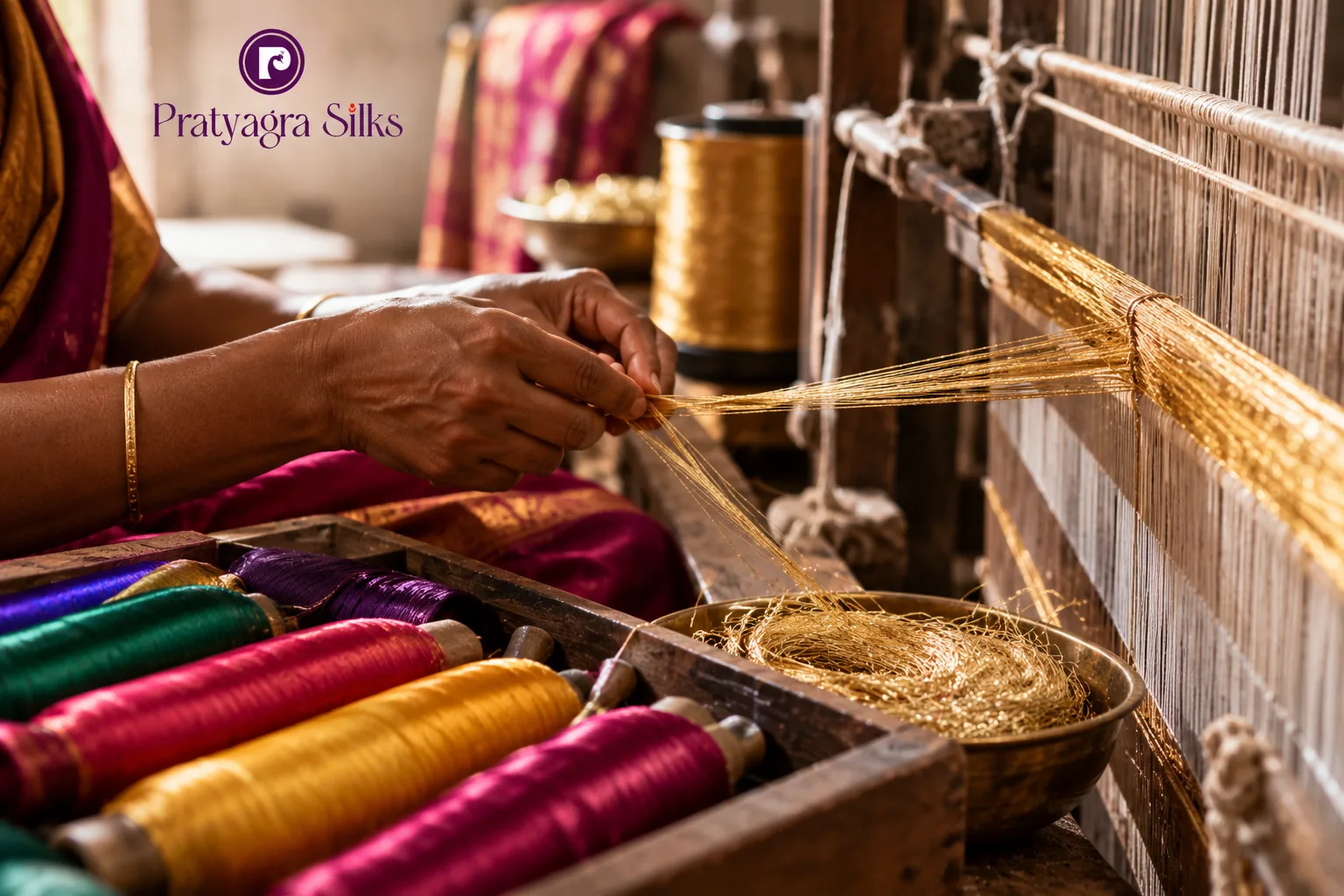
“Direct from the weaver” means sourcing sarees as close as possible to where they are created, instead of depending on multiple intermediary layers.
This gives us a closer understanding of the craftsmanship, materials, weaving techniques, and time involved in creating each saree.
It also creates a more direct relationship with the artisan communities behind the work.
Rather than looking at a saree only as a finished product, we look at the entire journey behind it.
What Changes When There Are Fewer Intermediaries?
With fewer layers between the loom and the customer, there is greater opportunity for transparency.
We can speak directly with our weaving partners, understand the work involved, discuss materials and techniques, and make decisions based on the actual craftsmanship.
For customers, this means the story behind the saree does not have to be several steps removed from its source.
Does "Direct" Mean We Work With Every Weaver?
No.
Direct sourcing does not mean choosing a saree simply because it comes from a loom.
We look for traditional techniques, honest use of materials, consistent craftsmanship, and a genuine connection to the weaving heritage of the region.
The relationship matters, but so does the standard of the saree.
Where Your Saree's Value Actually Goes
More Than Just a Price Tag
The price of a handwoven saree reflects much more than the silk and zari used to make it.
It includes the skill of the weaver, the time spent at the loom, the complexity of the design, the materials, and the craftsmanship required to complete the piece.
When we source closer to the loom, we have a better understanding of these individual elements.
This helps us make sourcing decisions based on craftsmanship rather than simply comparing finished sarees by appearance.
Respecting the Time Behind the Saree
A handwoven saree cannot always be produced according to a fast retail timeline.
Depending on its complexity, weaving can take several days or even several weeks.
We take this into account when planning collections rather than expecting the weaving process to move faster simply to meet demand.
A slower process is often part of what makes handloom special.
Why Authentic Materials Matter
Our direct relationships also help us understand the materials being used.
We prioritize pure mulberry silk, genuine zari, and natural dyes wherever the weaving tradition calls for them.
These choices can make sourcing slower and more expensive, but they are important to preserving the character of authentic handloom craftsmanship.
Three Reasons We Choose to Work Directly
To Build Long-Term Relationships
We do not see our connection with a weaving community as a one-time transaction.
We aim to build ongoing relationships through repeat engagement, transparent conversations, and continued sourcing.
A long-term relationship creates familiarity and trust on both sides.
Over time, that relationship helps us understand the craft better and make more informed choices for our collections.
To Understand the Craft Firsthand
Going closer to the source allows us to ask questions that matter.
How was the saree woven? Which technique was used? What materials went into it? How much time did the process require?
Understanding these details helps us appreciate the saree beyond its appearance and communicate its story more honestly to our customers.
To Keep the Weaver in the Story
A saree should not become anonymous once it leaves the loom.
Behind every handwoven piece is a person, a place, a technique, and a tradition.
Where possible, we want the story of that craftsmanship to remain part of the saree’s journey.
Because the person who creates the saree deserves to be part of its story.
What This Means for Our Customers
A More Transparent Saree Journey
For customers, direct sourcing creates an opportunity to understand what they are actually choosing.
Instead of seeing only a product image and a price, they can learn about the craft, region, materials, and weaving process behind the saree.
That context matters when choosing something as meaningful and lasting as a handwoven silk saree.
Choosing Craftsmanship Over Convenience
There will always be faster ways to source and sell sarees.
Our approach is intentionally different.
We are willing to spend more time understanding the source, maintaining relationships, and saying no when a saree does not meet our standards.
For us, convenience should never be the reason craftsmanship is compromised.
A Connection That Goes Both Ways
Our direct-from-weaver approach is ultimately about connection.
The weaver brings years of knowledge and skill.
We bring that craftsmanship closer to customers who value its story.
And the customer becomes part of a journey that begins long before the saree arrives at their doorstep.
Our Direct-from-Weaver Promise
Choosing to work directly with weavers is not a marketing line for us.
It is a sourcing philosophy we return to every time we consider a new saree.
It means fewer intermediary steps, closer relationships, greater understanding of the craft, and more attention to the people and traditions behind the product.
With over 50 artisan partners across India’s weaving clusters, our sourcing approach is built around creating meaningful relationships with the communities that make these sarees possible.
For Pratyagra Silks, a saree is never just something to sell.
It is something someone spent days or weeks creating by hand.
And that deserves to be recognized.
Q&A
What Does "Direct From the Weaver" Mean at Pratyagra Silks?
It means sourcing sarees as close as possible to their point of creation and building direct relationships with weavers and artisan communities rather than relying on several intermediary steps.
Why Does Pratyagra Avoid Multiple Intermediaries?
Fewer intermediary steps allow us to understand the craftsmanship, materials, techniques, and time involved in creating a saree more closely.
Does Direct Sourcing Mean Every Saree Is Automatically Selected?
No. Every saree still needs to meet our standards for craftsmanship, materials, traditional technique, and regional authenticity.
Does Working Directly With Weavers Make Sarees Less Expensive?
Not necessarily. Authentic materials, skilled craftsmanship, and fair engagement with weaving communities can make sourcing more expensive. Our focus is on preserving genuine craftsmanship rather than choosing only the lowest-cost option.
How Does the Direct-from-Weaver Approach Benefit Artisan Communities?
By maintaining ongoing relationships and sourcing directly, we aim to ensure that more of the value of a handwoven saree reaches the artisan communities responsible for creating it.
Why Should Customers Care About Where Their Saree Comes From?
Because the origin of a handwoven saree tells you about its technique, materials, regional identity, and the people who created it. Knowing that story can make the saree more meaningful than simply choosing it for its appearance.
Explore sarees sourced directly from the weavers who made them.
Comments