Why Where a Saree Begins Matters as Much as How It Looks
A saree can be beautiful and still carry very little behind it. The difference between a saree that simply looks traditional and one that genuinely carries a traditional craft story often comes down to a single question: where did it begin?
For Pratyagra Silks, that question is not an afterthought. It is the starting point.
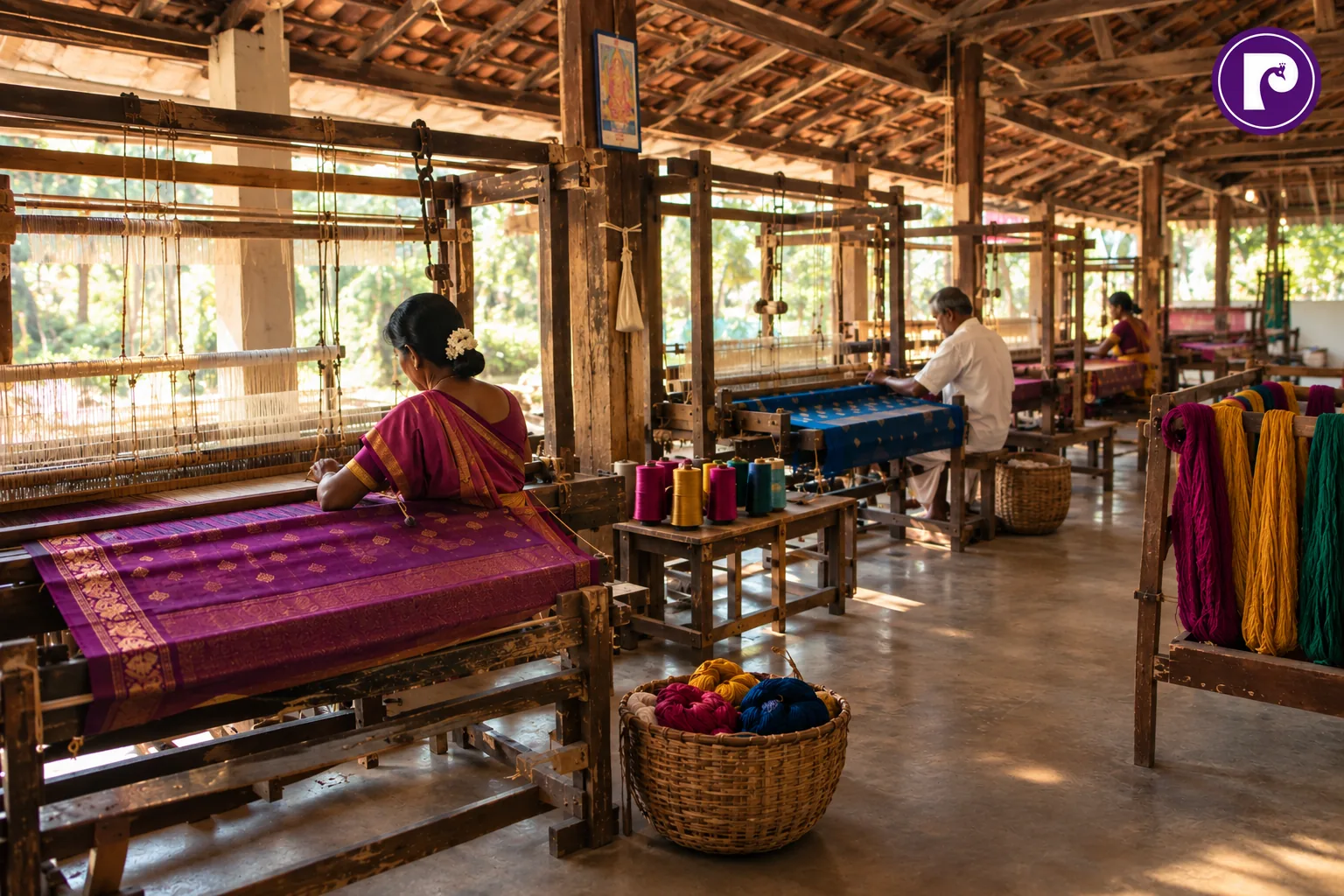
Long before a saree reaches a collection, a photograph, or a customer’s wardrobe, it begins at a loom, in the hands of a weaver whose family may have practiced the craft for generations. Choosing that weaver, and choosing to work with them the right way, is one of the most important decisions we make.
This is the story of how — and why — we choose our weavers the way we do.
What Does "Sourced at the Loom" Really Mean?
Why Do We Go Directly to the Source?
“Sourced at the loom” means exactly what it says — we choose sarees as close to their point of creation as possible, rather than several steps removed from it.
This matters for two reasons. First, it lets us understand the true craftsmanship behind a piece — the technique, the time invested, the materials used — instead of relying on secondhand descriptions. Second, it allows more of the value of each saree to reach the artisan communities who create them.
A saree sourced this way carries a traceable story, not just a finished look.
How Do We Identify the Right Weaving Partners?
Not every weaver we meet becomes a Pratyagra partner. We look for a few consistent qualities: authentic traditional technique, honest use of materials, and a genuine connection to the weaving tradition of their region.
We also pay attention to how a weaver talks about their own craft. Pride in the process, and a willingness to explain it, often says as much about quality as the saree itself does.
What Role Does Region Play in Our Selection?
India’s handloom traditions are deeply regional, and that regional identity is something we choose to preserve rather than blend away.
A Kanjivaram saree from Kanchipuram, a Banarasi brocade from Varanasi, and a Tussar silk from Bhagalpur each carry techniques and motifs shaped by generations working in that specific place. Sourcing directly from these regions helps us keep that distinct identity intact, instead of presenting handloom as one interchangeable category.
What We Look For Before a Saree Joins Our Collection
Craftsmanship Comes Before Everything Else
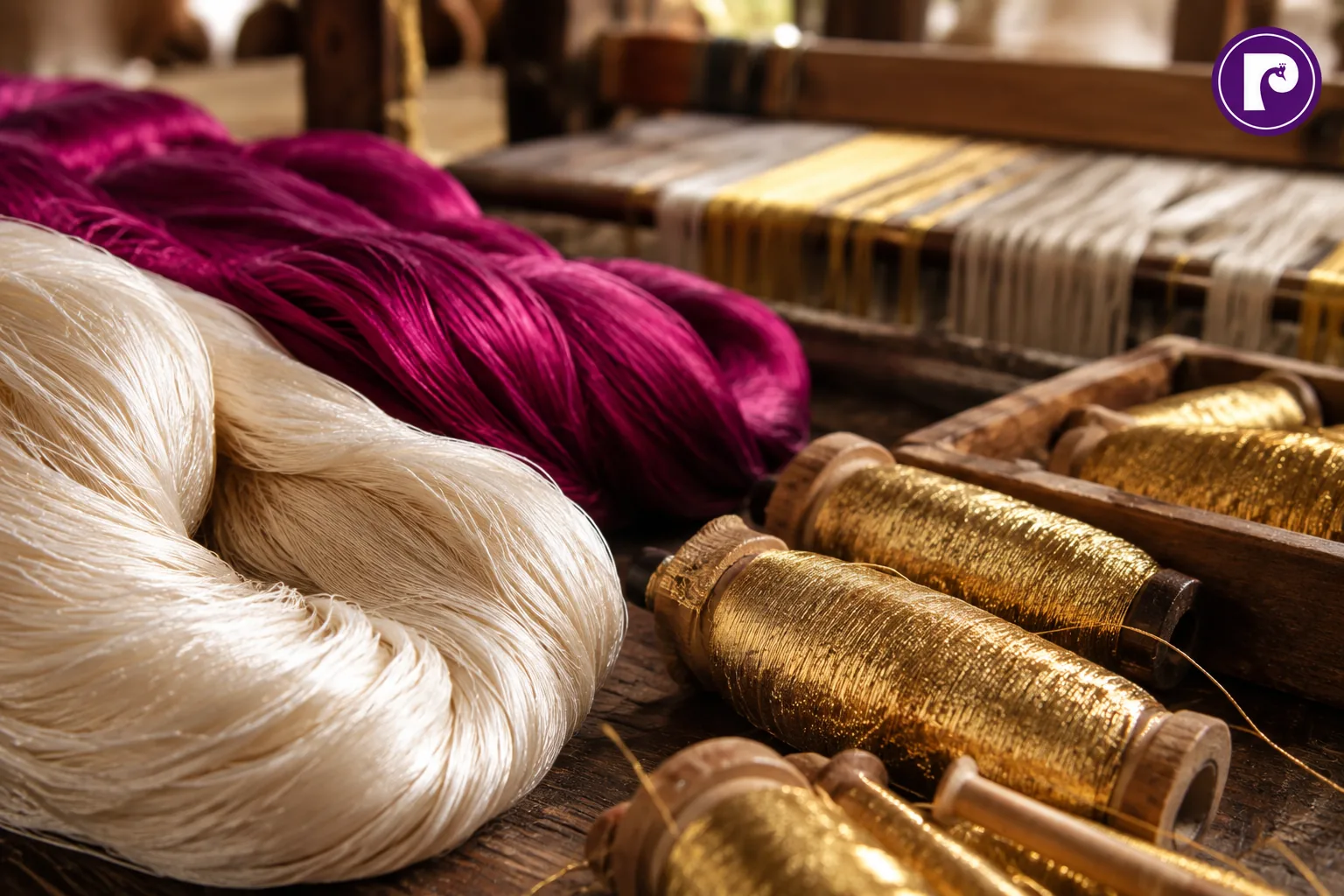
Before we consider a saree for Pratyagra, we look closely at how it was made. This means examining the weave density, the consistency of the zari work, and whether traditional techniques were followed faithfully or shortened for speed.
A saree that has been rushed rarely hides it. The difference shows in the finish, and it is usually the first thing we notice.
Materials Are Never a Place to Compromise
Authentic handloom depends on authentic materials. We prioritize pure mulberry silk, genuine zari, and natural dyes wherever the tradition calls for them, rather than substitutes that only imitate the final appearance.
This is often a slower and more expensive way to source. We consider it non-negotiable.
Three Commitments Behind Every Weaver We Choose
A Direct Relationship, Not a Transaction
We work to build ongoing relationships with weaving communities rather than one-time purchases. This means repeat engagement, fair and transparent pricing, and conversations that go beyond a single order.
A relationship built this way tends to produce better sarees over time, because trust runs in both directions.
Respect for the Weaver's Time
A handwoven saree can take anywhere from several days to several weeks to complete, depending on its complexity. We factor this timeline into how we plan and select our collections, rather than pressuring weavers to shorten a process that cannot be rushed without losing quality.
Recognition Beyond the Saree Itself
Where possible, we make an effort to share the story of the weaver and the region behind a piece — not just the saree’s design and price. A saree carries a name and a place behind it, and we believe that story deserves to travel with it.
Did you know?
Some of the weaving techniques used in Pratyagra sarees, such as certain zari and jamdani methods, have been passed down through families for well over a century, refined but never replaced.
Who Benefits From Sourcing This Way?
For Customers Who Want to Know the Story Behind Their Saree
Customers who choose Pratyagra often want more than a finished garment. They want to know where it was woven, by whom, and what tradition it belongs to. Sourcing directly at the loom is what allows us to answer those questions honestly.
For the Artisan Communities Themselves
With over 50 artisan partners across India's weaving clusters, our sourcing approach is also about ensuring that the value of a handwoven saree reaches the people who created it — not only the businesses that sell it.
Carrying the Philosophy Forward
Choosing a weaver is not a single decision made once. It is a standard we return to with every new saree we consider.
Sourcing at the loom means slower decisions, closer relationships, and a willingness to say no to a saree that does not meet the standard — even when it looks impressive at a glance.
For us, this is not an extra step. It is the foundation everything else at Pratyagra Silks is built on.
Q&A
What Does "Sourced at the Loom" Mean for Pratyagra Silks?
It means selecting sarees as close as possible to their point of creation, working directly with weavers and artisan communities rather than through several intermediary steps.
How Does Pratyagra Choose Which Weavers to Work With?
Weavers are chosen based on authentic traditional technique, honest use of materials, and a genuine connection to their region's weaving heritage.
Why Does Regional Origin Matter So Much in Sourcing?
Each Indian weaving region carries its own techniques, motifs, and history. Sourcing directly from these regions helps preserve that distinct identity rather than presenting handloom as one uniform category.
Does Sourcing This Way Make Sarees More Expensive?
It can, since authentic materials and fair engagement with weavers are prioritized over faster, lower-cost alternatives. Pratyagra considers this a necessary trade-off for genuine craftsmanship.
How Does This Approach Benefit Artisan Communities?
By working directly with weavers and maintaining ongoing relationships, more of the value of each saree reaches the artisans and communities who create them.
Discover sarees sourced directly from India's master weavers, woven with authentic craftsmanship.
Comments