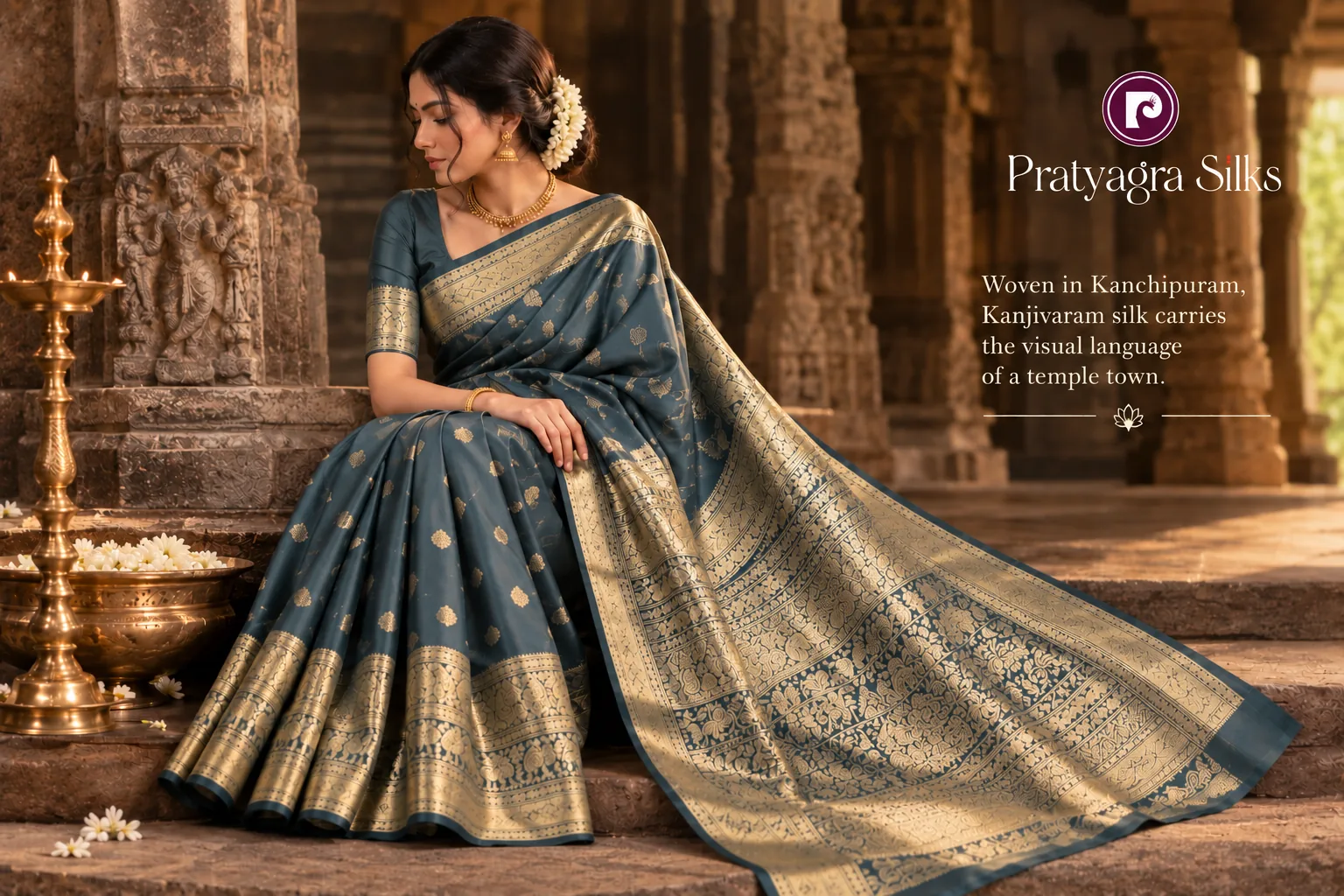
More Than a Silk Saree: Understanding the Kanjivaram Tradition
Some sarees are recognized instantly.
The distinctive contrast between the silk body and zari border. The rich pallu. The structured drape. The traditional motifs.
For many saree lovers, these details immediately bring one place to mind: Kanchipuram.
Known as one of India’s important centres of silk weaving, Kanchipuram has developed a saree tradition that is closely connected to the identity of the town itself.
At Pratyagra Silks, we believe that understanding a saree makes wearing it more meaningful.
So before looking at colours, designs, or occasions, it is worth going back to the beginning — the temple town of Kanchipuram and the weaving tradition that made its silk sarees famous.
This is our introduction to Kanjivaram silk: where it comes from, what makes the weave distinctive, and what to look for when choosing one.
What Is Kanjivaram Silk?
Where Does the Name Come From?
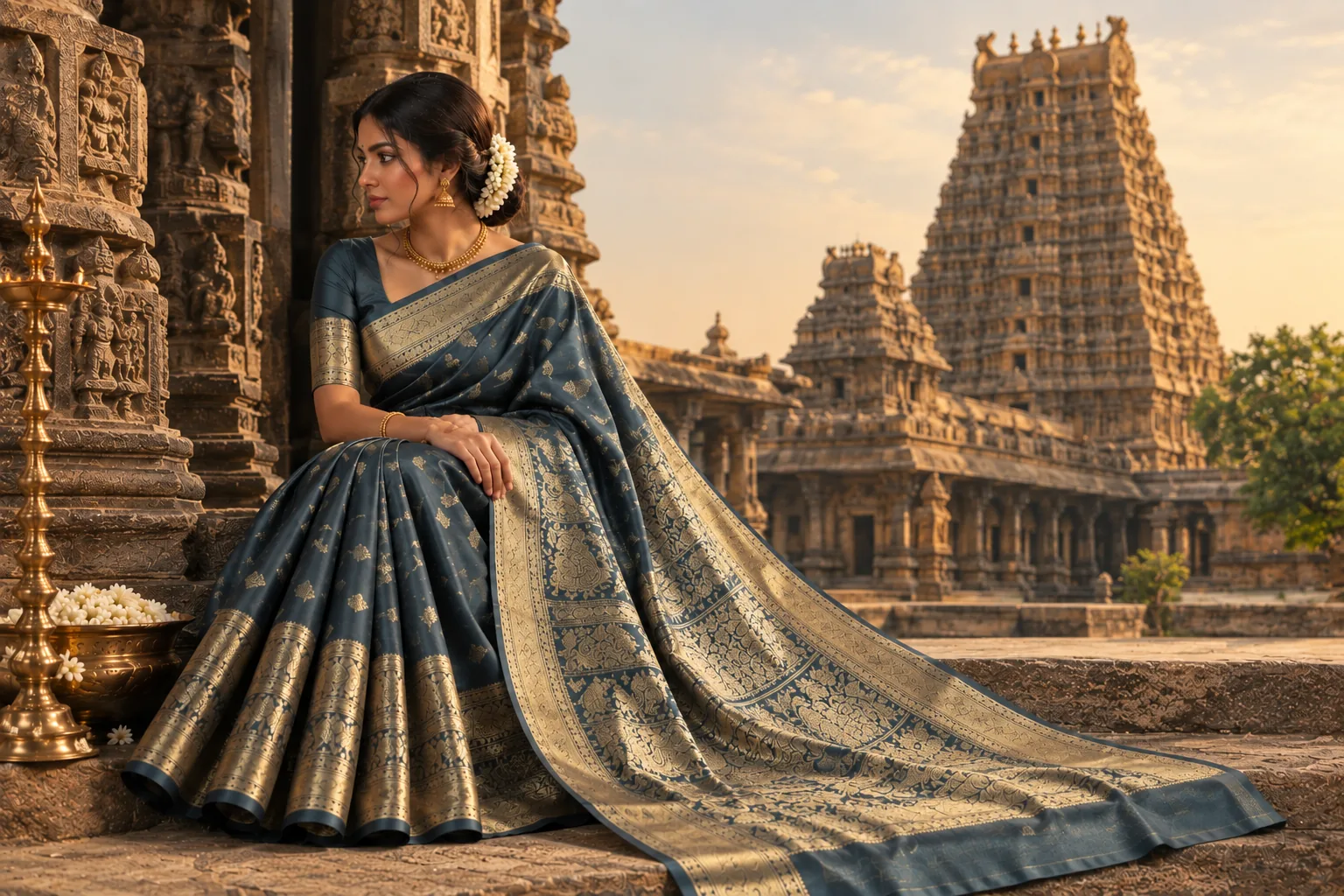
Kanjivaram is the commonly used name for the silk sarees traditionally associated with Kanchipuram in Tamil Nadu.
The town’s long association with silk weaving has made its sarees one of the most recognizable forms of South Indian handwoven silk.
The name itself connects the saree to its place of origin.
That connection matters because Kanjivaram is not simply a colour, pattern, or style.
It represents a regional weaving tradition.
What Makes the Weave Distinctive?
Traditional Kanjivaram sarees are known for their rich silk, substantial feel, distinctive borders, elaborate pallus, and detailed zari work.
The contrast between the body, border, and pallu can create a particularly striking appearance.
The saree’s structure also gives it a characteristic drape that many wearers associate with traditional South Indian silk.
Why Is the Region So Important?
Handloom traditions often develop alongside the communities and places where they are practiced.
Kanchipuram’s identity as a temple town and its long weaving heritage have influenced the visual language associated with its silk sarees.
Motifs, colours, borders, and traditional design elements can carry references to architecture, nature, mythology, and regional aesthetics.
For us, preserving that regional identity is part of respecting the craft.
The Elements That Define a Kanjivaram Saree
The Silk Body
The silk body forms the foundation of the saree.
A traditional Kanjivaram is valued for its rich silk appearance, texture, and substantial drape.
The quality of the silk influences how the saree feels in the hand, how it falls when worn, and how it interacts with the zari and woven motifs.
The Zari Border
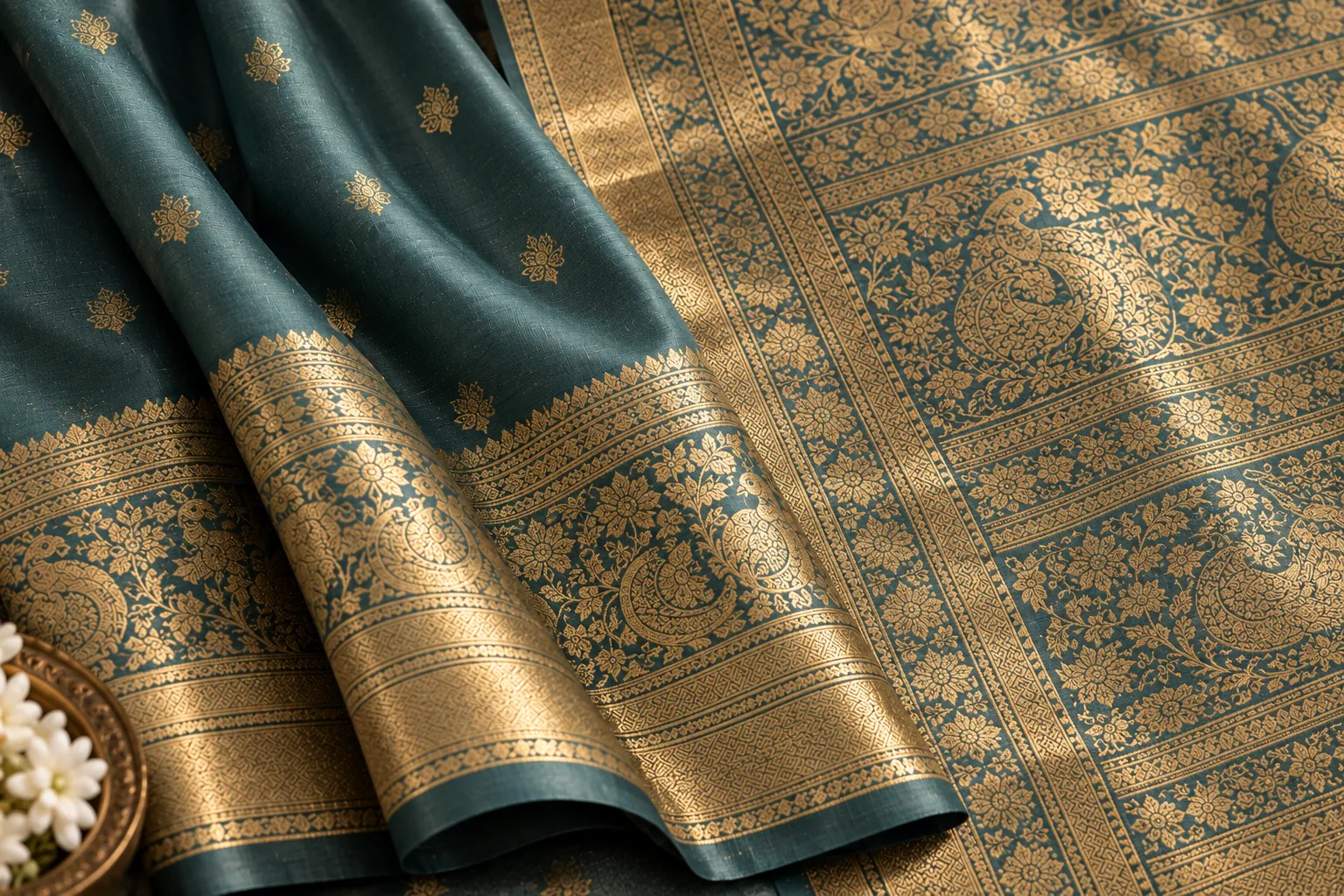
One of the first things people notice about a Kanjivaram saree is its border.
It can range from relatively understated designs to elaborate, heavily worked patterns.
Traditional borders can feature geometric arrangements, floral forms, temple-inspired elements, and other motifs.
The border is not simply decoration.
It is an important part of the saree’s visual identity.
The Pallu
The pallu provides another major area for craftsmanship.
It can carry intricate zari work, contrasting colours, traditional motifs, and carefully structured patterns.
When the saree is draped, the pallu often becomes one of the most visible elements, making its detailing particularly important.
Traditional Motifs
Kanjivaram design vocabulary includes a wide variety of motifs.
Some are inspired by nature, including flowers, leaves, birds, and other forms.
Others draw from traditional geometric patterns, temple architecture, or established regional design traditions.
These motifs allow a saree to feel traditional without making every saree look the same.
Why Kanjivaram Sarees Take Time to Create
Handloom Begins With Preparation
A handwoven saree does not begin when the first motif appears.
There is preparation involved before weaving itself begins, including the handling and arrangement of the silk and zari required for the design.
Every stage contributes to the final result.
The Weaver Brings the Design Together
On the handloom, the weaver works through the structure of the saree section by section.
The body, borders, motifs, and pallu need to come together with consistency and precision.
This requires concentration and experience.
The complexity of the design can also influence how long the weaving process takes.
Craftsmanship Cannot Be Rushed
A handwoven saree follows the pace of the loom.
Depending on its complexity, a saree can require several days or weeks of work.
This is one reason we believe it is important to understand what sits behind the finished product.
The time invested by the weaver is part of the value of the saree.
Every Saree Carries the Weaver's Work
Even when two sarees follow a similar design idea, the finished pieces are not simply identical manufactured products.
The weaving process, detailing, colour combination, and execution give each saree its own character.
That individuality is one of the reasons handloom continues to matter.
How to Look at a Kanjivaram Saree
Start With the Silk
When examining a Kanjivaram saree, begin with the fabric itself.
Look at its texture, feel, drape, and overall finish.
The silk should work harmoniously with the design rather than feeling like a secondary element.
Examine the Border and Pallu
The border and pallu contain some of the most detailed work in a traditional silk saree.
Look at the precision of the motifs, consistency of the zari, and relationship between the different design elements.
Small details often reveal the amount of care that went into the weaving.
Look at the Overall Balance
A beautiful Kanjivaram is not only about having more zari or more intricate motifs.
The relationship between colour, silk, border, pallu, and motifs is equally important.
Sometimes a relatively simple design can have a remarkable presence because all of its elements are balanced well.
Ask About Its Origin and Craft
When choosing a Kanjivaram, it is worth asking questions.
Where was it woven? What materials were used? What technique was followed? Who made it?
Understanding the answers gives you a clearer picture of the saree you are purchasing.
Why Kanjivaram Continues to Matter
A Saree Connected to Place
Kanjivaram silk is inseparable from the identity of Kanchipuram.
The town, its weaving communities, and its long-standing craft tradition are all part of the story.
Wearing a Kanjivaram therefore means wearing something connected to a specific place and tradition.
Traditional Without Being Limited to Tradition
Kanjivaram sarees have traditionally been associated with weddings, festivals, ceremonies, and important family occasions.
But their design vocabulary continues to evolve.
Contemporary colour combinations, updated layouts, and modern styling allow Kanjivaram sarees to move between generations without losing their traditional identity.
A Craft Worth Understanding
At Pratyagra Silks, we believe the more you understand a handwoven saree, the more you appreciate what you are wearing.
A Kanjivaram is not simply silk and zari arranged into a beautiful garment.
It represents a place, a weaving tradition, a skilled artisan, and hours of work at the loom.
That is what makes it worth looking beyond the surface.
Q&A
What Is a Kanjivaram Silk Saree?
A Kanjivaram silk saree is a traditional handwoven silk saree associated with Kanchipuram in Tamil Nadu, known for its rich silk, distinctive borders, detailed pallus, and zari work.
Why Is Kanchipuram Important to Kanjivaram Silk?
Kanchipuram has a long-established silk-weaving tradition, and the saree's identity is closely connected to the town and its weaving communities.
What Are the Main Features of a Kanjivaram Saree?
The silk body, zari border, detailed pallu, traditional motifs, and structured drape are among the features commonly associated with Kanjivaram sarees.
What Kind of Motifs Are Found in Kanjivaram Sarees?
Kanjivaram designs can include floral and natural motifs, geometric patterns, temple-inspired elements, and other traditional regional design forms.
How Long Does It Take to Weave a Kanjivaram Saree?
The time varies depending on the design and complexity. A handwoven saree can take several days or weeks to complete.
Is Every Kanjivaram Saree the Same?
No. Colour combinations, motifs, border designs, pallu patterns, weaving details, and overall execution can vary considerably from one saree to another.
What Should I Look for When Buying a Kanjivaram Saree?
Look at the quality and feel of the silk, consistency of the weave, precision of the zari and motifs, finishing, overall balance, and information about the saree's origin and craftsmanship.
Why Is Kanjivaram Considered an Important Handloom Tradition?
Its importance comes from its connection to Kanchipuram, its established weaving heritage, distinctive design vocabulary, and the skilled craftsmanship involved in creating the sarees.
Explore our collection of authentic Kanjivaram silk sarees.
Comments